
Artificial Intelligence (AI) is rapidly transforming education worldwide. From personalized learning platforms to intelligent tutoring systems, AI offers innovative ways to enhance teaching and learning. However, like any technology, it comes with both advantages and disadvantages, especially in the context of developing countries such as Bangladesh.
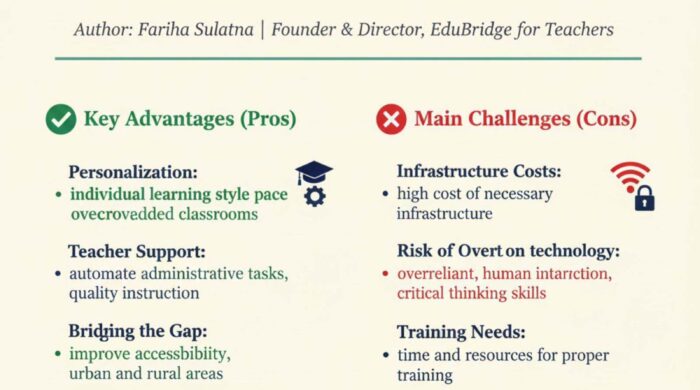
One of the most significant advantages of AI in education is personalization. AI can adapt lessons according to individual students’ learning styles and pace, allowing learners to grasp concepts more effectively. In countries like Bangladesh, where classrooms are often overcrowded, AI-driven tools can provide extra support to students who may be left behind. Additionally, AI can automate administrative tasks, reducing teachers’ workload and allowing them to focus on quality instruction.
On the other hand, AI implementation poses several challenges. High costs of infrastructure, such as computers and reliable internet, may be prohibitive for many schools in Bangladesh. There is also the risk of over-reliance on technology, which may reduce human interaction and critical thinking skills. Moreover, teachers and students need proper training to use AI effectively, which requires both time and resources.
Despite these challenges, AI has the potential to revolutionize education in Bangladesh. By improving accessibility, offering personalized learning, and supporting teachers, AI can help bridge the educational gap between urban and rural areas. If the government and educational institutions invest in infrastructure and training, AI could become a powerful tool for national development.
In conclusion, while AI is not a panacea, its thoughtful integration into the education system could bring transformative benefits. Balancing technology with human guidance will be key to ensuring that students in developing countries like Bangladesh reap the maximum advantages.