

Two years after the July Uprising, Bangladesh finds itself facing an uncomfortable paradox. The movement that once united citizens against authoritarianism is now, in some quarters, being invoked for partisan interests, with some of its former leaders openly threatening a democratically elected government.
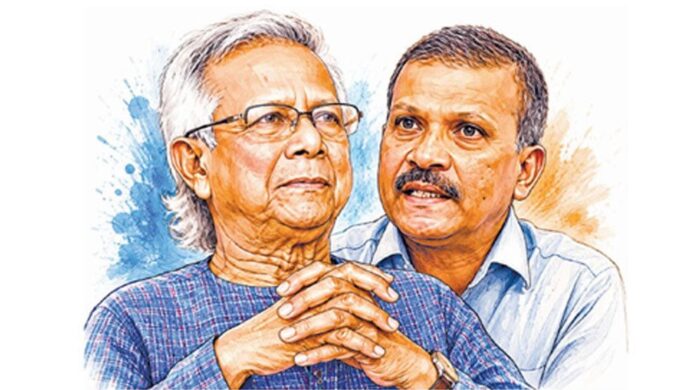
Recent remarks by National Citizen Party (NCP) Convener Nahid Islam and Jamaat-e-Islami Ameer Dr Shafiqur Rahman have become the centre of political debate. Both leaders have warned that if Prime Minister Tarique Rahman’s elected BNP government fails to implement their proposed constitutional reforms, another uprising could follow.
They are advocating a constitutional framework that has failed to secure consensus among all political forces that supported the July Uprising.
These warnings are no longer confined to political rhetoric. Instead, they signal a dangerous willingness to elevate street mobilisation above democratic dialogue. No government elected by the people can be expected to surrender its constitutional authority under threats from any political group.
The July Uprising was never intended to replace one form of political coercion with another. Yet some political actors now appear determined to present themselves—and their parties—as the sole custodians of the spirit of July.
Such an approach represents a significant departure from the ideals that inspired the student-led movement of 2024. The July movement pledged to challenge the culture of opportunistic politics. Today, however, the message from several political groups appears to be that unless their constitutional agenda is accepted, the country must once again face political instability.
That is not democratic engagement; it is unmistakable political pressure.
There are also striking similarities between the rhetoric of the NCP and Jamaat-e-Islami.
Addressing a rally in Barishal on 18 July, Jamaat Ameer Dr Shafiqur Rahman similarly warned that if constitutional reforms were not carried out in line with his party’s expectations, the country should prepare for another political movement.
When parties with different political backgrounds issue the same ultimatum, an important question naturally arises: should constitutional disputes be resolved through dialogue, or through the strength of street protests?
Constitutions cannot be written under threats. They are built upon compromise, parliamentary debate and broad national consensus. Whenever a political party suggests that the legitimacy of an elected government depends upon accepting its conditions, it weakens the very foundations of democratic governance.
Nor is this culture of confrontation limited to political speeches. It is increasingly reflected in activities on the ground.
Recent programmes organised by Islami Chhatra Shibir at Dhaka and Rajshahi universities against another political organisation have also generated considerable discussion, particularly over the slogans used during those events. In a democracy, political opponents are challenged through arguments, elections and institutions—not through a mindset that seeks to turn rivals into targets.
Regardless of the organisers’ intentions, such programmes risk blurring the line between legitimate political activism and vigilantism. Combined with repeated threats of fresh uprisings, these activities contribute to a troubling political environment in which the ability to exert pressure through street power increasingly appears to outweigh democratic institutions.
Perhaps the greatest irony is that many of today’s problems stem from weaknesses in the process through which the July Charter itself was drafted.
From the very beginning, the charter faced significant challenges regarding its claim to represent a genuine national consensus. Critics argued that the work of the National Consensus Commission, chaired by Dr Ali Riaz, was exclusionary from the outset.
Of Bangladesh’s 52 registered political parties, only 21 were formally invited to participate in the dialogue, alongside nine unregistered organisations. As a result, many registered political parties were excluded entirely from discussions on constitutional reform.
Such omissions represented a major shortcoming in any process intended to produce what was described as a “national consensus”.
The lack of consensus became even more apparent when several participating political parties ultimately declined to sign the charter.
In October 2025, the Communist Party of Bangladesh (CPB), the Socialist Party of Bangladesh (BASAD), BASAD (Marxist) and Bangladesh JASAD all refused to sign the July National Charter. The National Citizen Party itself also initially withheld its signature.
If a charter failed to command unanimous support even among those participating in its own consultation process, it is reasonable to ask how it could later be presented to the nation as representing a universally accepted political settlement.
Critics argued that the entire political transition was effectively being held hostage to the adoption of this charter. According to them, the country’s electoral process itself was delayed because of attempts to make acceptance of the charter a precondition for moving forward.
Statements made by leaders of the current government have lent weight to that criticism.
Speaking in Parliament on 30 April, Home Affairs Minister Salahuddin Ahmed described the executive order implementing the July National Charter as unlawful. He said the BNP had deliberately refrained from speaking publicly at the time in order to avoid jeopardising the election process. According to him, the party eventually agreed to sign the charter only because it feared that elections might otherwise be postponed in the name of constitutional reform.
Likewise, Salahuddin Ahmed, who led the BNP delegation during discussions at the National Consensus Commission, remarked:
“Some senior intellectuals with white hair arrived from abroad carrying baskets full of miraculous reform proposals. Through lengthy discussions in the Reform Commission, the July National Charter eventually took shape.”
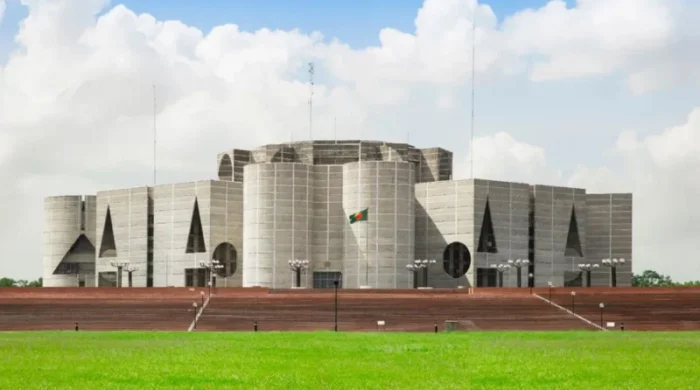
It is worth recalling that the primary responsibility of any interim administration is to restore democratic continuity through a credible and inclusive election. Sensitive issues such as constitutional reform, however, require the participation and accountability of a parliament elected by the people.
The proposal to settle unresolved constitutional questions through a referendum has further complicated the debate. While a referendum is a recognised democratic mechanism, it cannot substitute for political consensus.
Fundamental issues involving executive authority, the powers of Parliament, judicial independence and constitutional rights are too complex to be reduced to simple “Yes” or “No” votes. Attempting to resolve such matters through a referendum alone risks oversimplifying public opinion on issues that demand careful deliberation.
Using a referendum as a tool to manufacture unity after political negotiations have failed was arguably a fundamental mistake. Referendums work best when political leaders have already negotiated a broad framework of agreement. In deeply divided political environments, they cannot create consensus on their own.
The post-July political crisis has therefore been about more than constitutional reform. It has also become a struggle over who owns the legacy of the July Uprising.
The student movement was widely viewed as belonging to no single political party. Yet almost immediately after the uprising, different political groups began presenting themselves as the movement’s sole representatives. A popular uprising born out of the sacrifices of ordinary citizens gradually became the subject of political competition.
This stands in contrast to Bangladesh’s political history.
Historically, the country’s major democratic movements have been remembered not for individual or party ownership but for collective sacrifice in the national interest. The July Uprising should similarly not become the exclusive property of any political party, ideology or generation.
Some political actors increasingly behave as though criticism of their proposals amounts to opposition to the July movement itself. Such a position is deeply troubling. A democratic movement belongs to all citizens, not to any single political organisation.
Political developments following the uprising have also produced fresh polarisation.
Although many welcomed the emergence of the National Citizen Party (NCP) from the Anti-Discrimination Student Movement, others questioned how the most visible leaders of a broad-based civic movement rapidly transformed themselves into leaders of an ordinary political party.
Questions have inevitably followed.
Those who promised to transform Bangladesh’s political culture are themselves now being asked whether they have become trapped in the same cycle of power politics, patronage and political favouritism that they once pledged to dismantle.
The NCP’s increasingly visible political proximity to Jamaat-e-Islami has further weakened its claim of practising inclusive politics.
Calls by some political figures to permanently exclude particular groups from political participation, together with attempts to reinterpret aspects of the history of Bangladesh’s 1971 Liberation War, have generated unease and disagreement even among political leaders themselves. For a party claiming to represent a new political culture, such questions about its alliances and values cannot simply be ignored.
At the same time, attacks on minority communities, assaults on cultural institutions and incidents of mob justice during the post-July period have heightened public concern.
Those claiming to inherit the legacy of the July Uprising were widely expected to demonstrate greater responsibility in protecting pluralism, the rule of law and the civil rights of all citizens.
Another uncomfortable reality is that a movement originally launched against privilege and nepotism has itself seen some of its representatives face allegations of misconduct.
Accusations ranging from exploiting political identity for personal gain to abusing political influence have inevitably damaged public confidence.
The greatest danger is that a historic movement gradually loses its moral authority when its language is used less to advance democratic reform than to pursue political advantage.
Against this backdrop, repeated threats of another uprising can no longer be viewed simply as calls for political mobilisation. Rather, they increasingly resemble attempts to obtain through street pressure what could not be achieved through the ballot box.
No single political party has the right to exercise a veto over Bangladesh’s constitutional future.
Nor does any political group enjoy permanent ownership of the democratic aspirations of the people.
No one possesses the moral authority to threaten national instability simply because an elected government declines to implement a particular political agenda.
If supporters genuinely believe their constitutional proposals enjoy broad public backing, the democratic path remains open. Contest elections, secure a parliamentary majority and implement reforms through constitutional procedures.
That is how democracy functions.
Threatening another uprising whenever political negotiations fail to produce one’s preferred outcome is not democratic politics. Rather, it reflects a lack of confidence in the democratic process itself.
The greatest betrayal of the spirit of July is not disagreement over constitutional reform. It is the belief that street mobilisation should replace the ballot box and Parliament as the ultimate source of political authority.
Bangladesh needs constitutional reform through an inclusive, elected and democratic process—not political blackmail carried out in the name of revolution.
Speaking at a discussion titled “Bloody July: The Context, the Debt of Blood and Bangladesh’s Future” at the National Press Club in Dhaka on 19 July, Home Affairs Minister Salahuddin Ahmed remarked:
“No one can build a lasting political career by trading on the spirit of July. July does not belong to any individual or political party. Rather than exploiting the movement for political interests, everyone should act responsibly to fulfil its original aspirations.”